

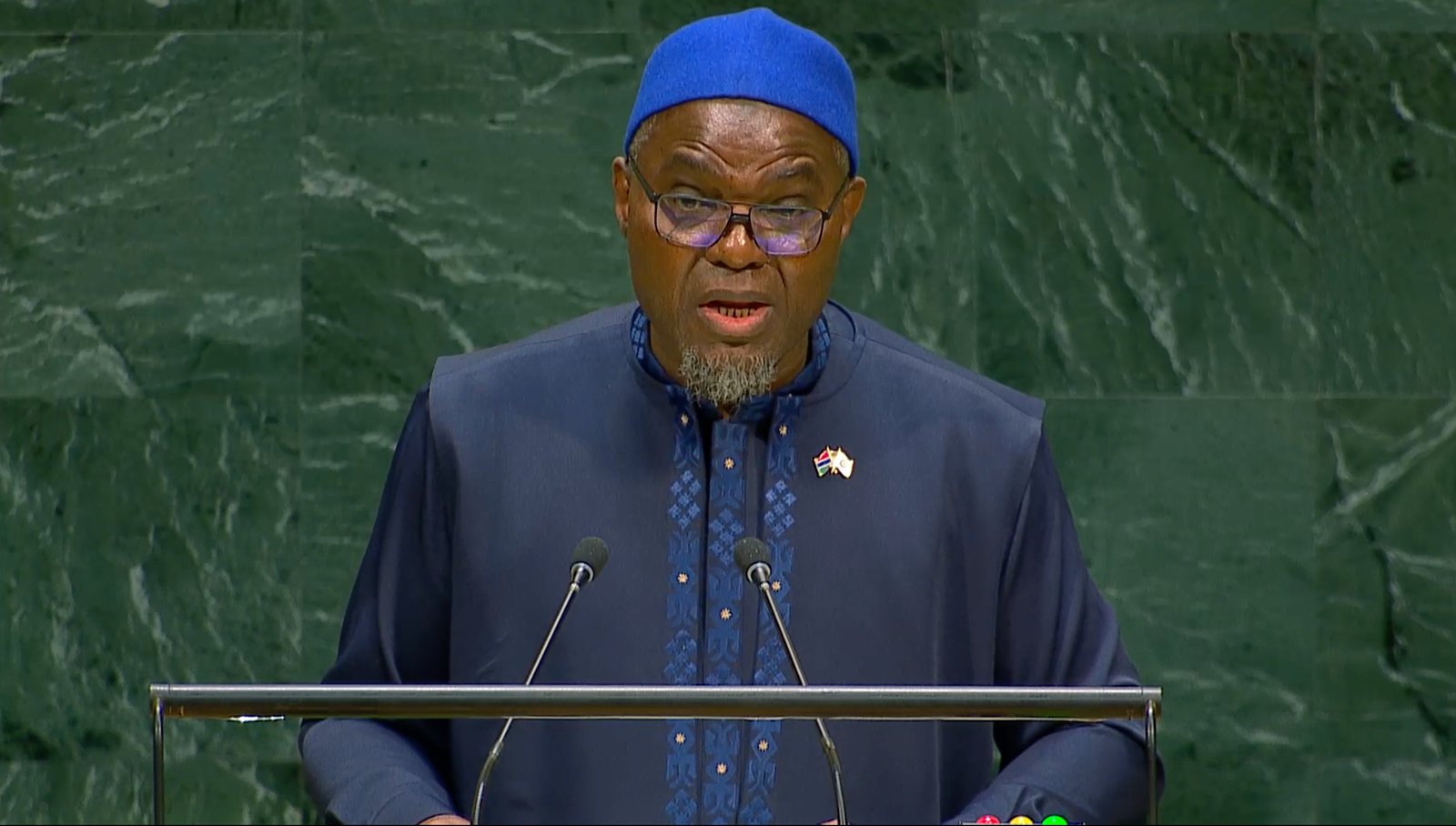
Muhammed Jallow, Vice President of Gambia, said that Gambia’s own experience within the Organization, as chair of the Second Committee during the eightieth Assembly session, shows that multilateralism can still deliver.
Even with profound disagreement over consequential economic and development issues, progress was made as Member States approached negotiations with political will, mutual respect and a shared sense of responsibility, he said.
“That experience reminded us that multilateralism does not require unanimity on every issue,” he said. “It requires the willingness to remain at the table, to listen, to negotiate and to have the courage to compromise.”
The stakes are greatest in international peace and security. “…surely we can summon the same political courage to prevent conflicts, resolve wars and build lasting peace,” he said.
Gambia speaks from experience as the Organization’s preventive diplomacy, working with the African Union and Economic Community of West African States (ECOWAS), helped it pass through a moment of acute constitutional uncertainty in 2017, he said.
At that time, the Gambian people’s democratic choice faced a grave challenge. The solidarity showed that preventive diplomacy is not just an abstract concept.
“It is a practical instrument for preventing confrontation, creating space for dialogue and protecting institutions,” he said. “Sometimes, it can change the course of a nation.”
Recognizing the Organization’s limited resources and increasing demands, Gambia supports reforms so developing countries can participate meaningfully in decisions that shape their future, he said.
The Assembly must remain at the centre of global policymaking and Council reform would help restore its legitimacy and strengthen trust, he said. Gambia reaffirms its support for the Common African Position reflected in the Ezulwini Consensus and the Sirte Declaration.